
Panic, Patriarchy & Perfect Marks
Tension queens with quiet screams

There is a sentence so many Indian women carry quietly in their bodies long before they ever find the words for it: “I am always on alert.” Not just when walking home at night or riding a cab alone, but in the living room, at the office, in front of relatives, on family WhatsApp groups, even inside our own heads. What the world calls “anxiety” often feels, to Brown women, less like an illness and more like the background noise of life—an alarm that never fully switches off.
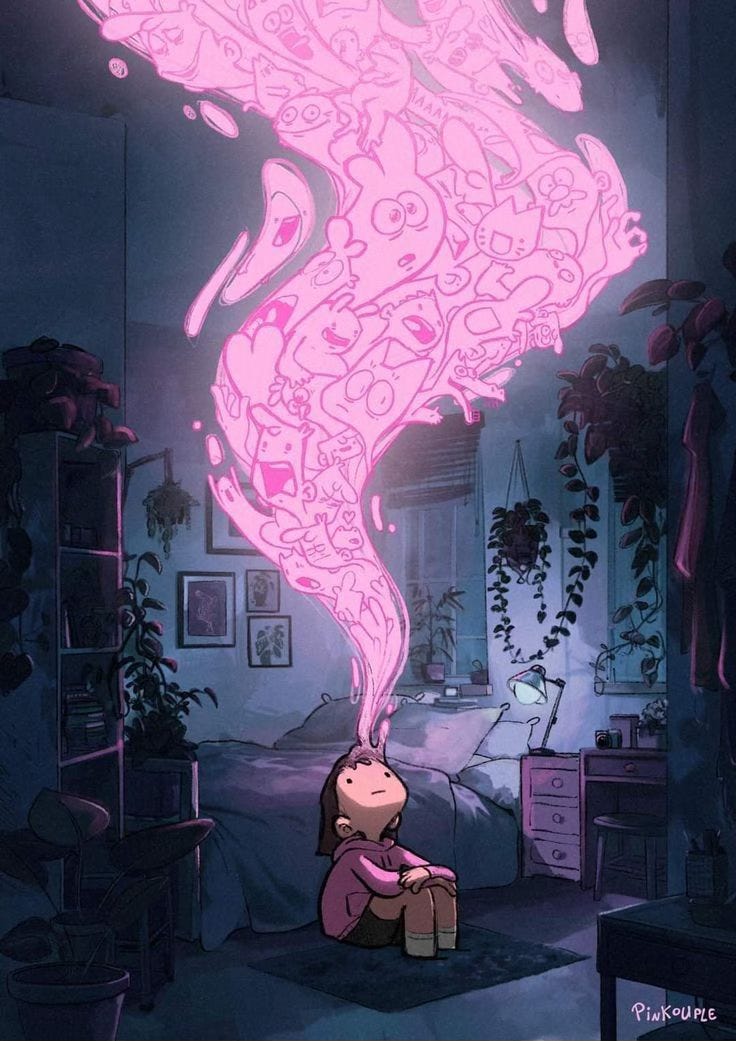
This newsletter is for the woman who has never felt truly relaxed in her own home, for the daughter who became “responsible” too early, for the overachiever who is exhausted from trying to be good enough, and for the younger girl who doesn’t yet know that the tightness in her chest has a name.
What Anxiety Looks Like in Brown Daughters
Many of us didn’t grow up with the language of “mental health.” What we knew instead were words like “tension,” “stress,” “overthinking,” or simply “you’re too sensitive.” Anxiety did not show up only as panic attacks; it showed up as:
Replaying every conversation after a family gathering to check if we offended someone.
Studying twice as hard because one “B” felt like proof that we were failures.
Feeling our heart race when we heard a parent’s footsteps or our phone light up with their name.
Being unable to rest even on holidays, because guilt whispered we should be doing more.
On the outside, this often looked like being the “good girl”: high marks, well-behaved, polite, helpful, always available. On the inside, it was a constant audit of our own worth. Every action quietly asked: “Will they still love me if I don’t do this right?”
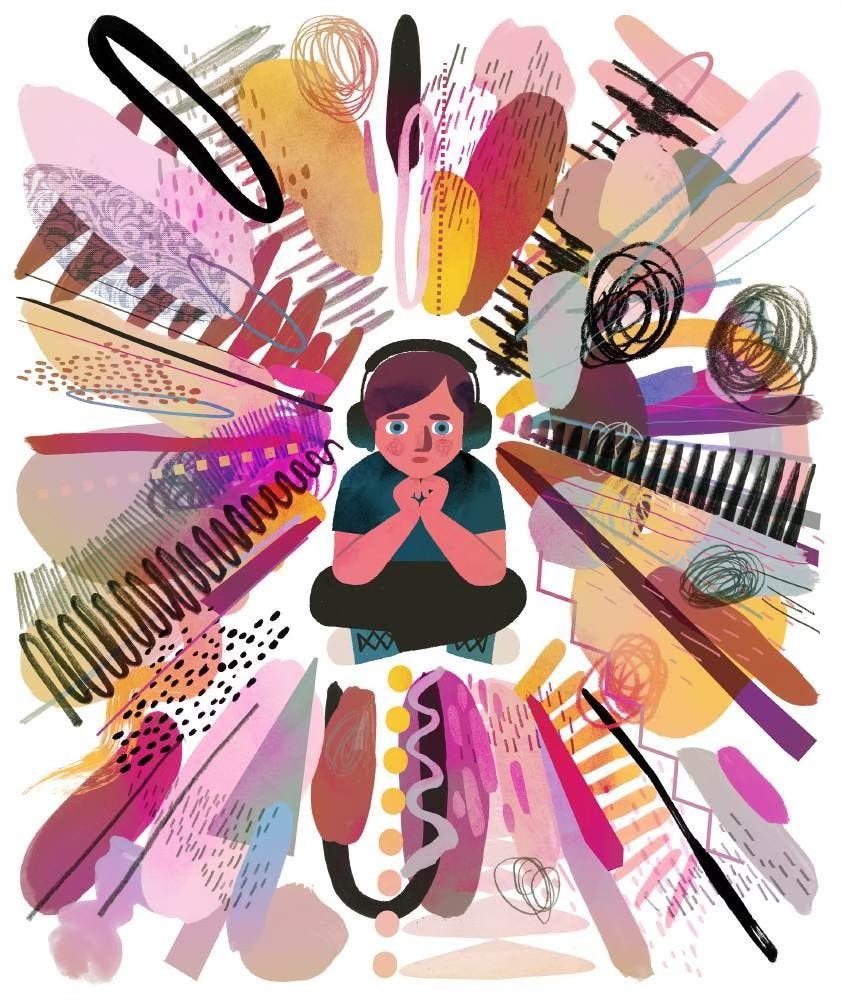
Conditional Love: When Belonging Has Terms and Conditions
Many Brown women grew up in homes where love was real—but rarely free.
Maybe your parents sacrificed everything for your education, and you carry their dreams like a debt. Maybe praise only arrived with a condition: “You did well… but next time aim for rank 1.” Maybe your mistakes were family events, discussed loudly, never forgotten. Maybe your body, clothes, marriage, career, even the way you laugh were open for public review.
When love is tangled with performance, a child learns quickly:
Safety is not guaranteed; it is earned.
Approval can be withdrawn at any time.
One wrong step can “shame” the whole family.
That is not just “strict parenting.” It is a nervous system growing up in survival mode. The result is an adult woman who appears strong, sorted, and “mature for her age,” but inside carries the blueprint of a house where the floor could collapse any moment.
Anxiety, in this context, is not a random disorder. It is evidence—a living record of growing up in a home where love had conditions, where privacy was luxury, and where silence was often safer than honesty.
Hyper-Watched, Hyper-Criticised, Hyper-Responsible
Think about how early many Indian girls are put under surveillance. The way we sit, speak, stand, smile, dress, laugh, text, and post is measured: “What will people say?” “You are a girl, behave properly.” Someone is always watching—parents, neighbours, relatives, teachers, society.
Over time, the outer eyes become an inner one. Even when nobody is in the room, someone in your mind is judging you:
“Don’t say too much, they’ll think you’re arrogant.”
“Don’t say too little, they’ll think you’re dumb or rude.”
“Don’t show anger, you’re a drama queen.”
“Don’t cry, you’re weak and manipulative.”
Alongside this, many daughters are turned into junior parents. At twelve, they are handling younger siblings. At fifteen, they are peacemakers between adults. At twenty-two, they are expected to manage career, home, in-laws, finances, and emotional labour with a smile.
No wonder so many Brown women say, “I don’t remember being a child.” Childhood was an internship for future unpaid caregiving. When you are constantly responsible, constantly observed, constantly corrected, your body learns one thing: do not switch off. And that is simply another word for anxiety.
When the World Outside Feels Like Another Judgment Room
For many Indian women, stepping out of the house does not reduce anxiety; it multiplies it.
At work, every mistake feels like confirmation of what some colleagues quietly believe about women, or about Brown women specifically. Many of us learn to double-check emails ten times, to rehearse every line before speaking in meetings, to laugh off inappropriate comments, to wear “office-safe” versions of ourselves so we don’t look “too loud,” “too emotional,” “too desi,” “too ambitious.”
This is code-switching: changing our accent, clothes, personality just enough to feel acceptable. On paper, it looks like professionalism. In the body, it feels like erasing ourselves piece by piece. Over months and years, that performance becomes heavy. You finish the day exhausted, not just from tasks, but from pretending.
Then there is the street: planning your route, gripping your keys, messaging live locations, pretending to be on calls, avoiding eye contact, scanning every man who walks too close. Not because you are “paranoid,” but because you’ve learned what happens when women are not careful.
To live in a body that is always calculating risk—Will this auto driver be safe? Will this boss take advantage? Will this uncle make a comment?—is to live with anxiety even when nothing visibly “bad” is happening. The threat is not theoretical; it is remembered.
The Unspoken Line: “It’s Not That Bad, Others Have It Worse”
Many Indian women struggle to name their pain because comparison is built into our culture. If you were fed, clothed, schooled, maybe even allowed to work, the script says: “Be grateful. Other women have it worse.” So you learn to minimize your suffering—even to yourself.
“At least they didn’t hit me.”
“At least they paid for my education.”
“At least I have a job.”
Gratitude becomes a cage when it is used to silence your very real hurt. You can be grateful and still wounded. You can love your family and still acknowledge that their ways broke something in you. Both can be true at once.
This “others have it worse” narrative is one reason so many Brown women delay seeking help until their bodies force them to stop—through burnout, physical illness, panic attacks, or emotional numbness. Anxiety is often the body’s last language when all the earlier whispers were ignored.
For the Women Who Recognize Themselves in This
If you feel like this article is reading your diary, know this: you are not “too sensitive,” “dramatic,” or “weak.” Your nervous system is responding exactly as any human’s would under chronic scrutiny, pressure, and conditional safety.
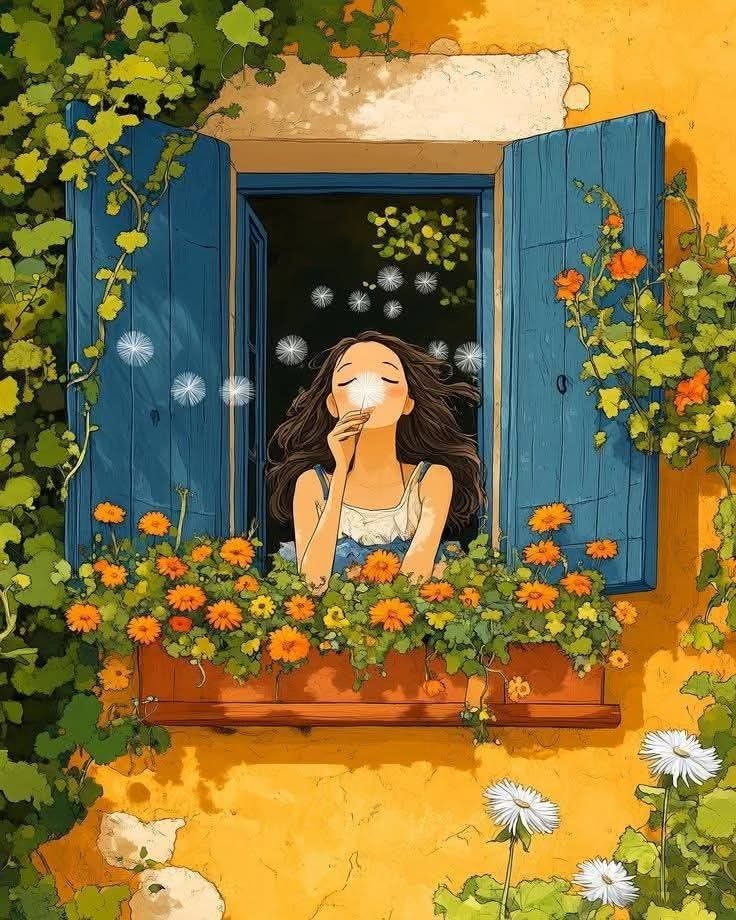
You might:
Feel guilty resting.
Panic when someone is disappointed in you.
Replay past mistakes for years.
Struggle to say “no” even when you are at breaking point.
Feel ten years older than you are.
These are not personal failures. They are survival skills you built as a Brown daughter. The problem is not that you learned them; the problem is that you were put in situations where you had to.
Your anxiety is not proof that you are broken; it is proof that you adapted.
For the Girls Who Are Growing Up in This Now
If you are younger and already feeling the weight—watching your parents fight, hiding parts of yourself, secretly crying after being compared to cousins, shrinking your dreams because they don’t fit the marriage timeline—please hear this:
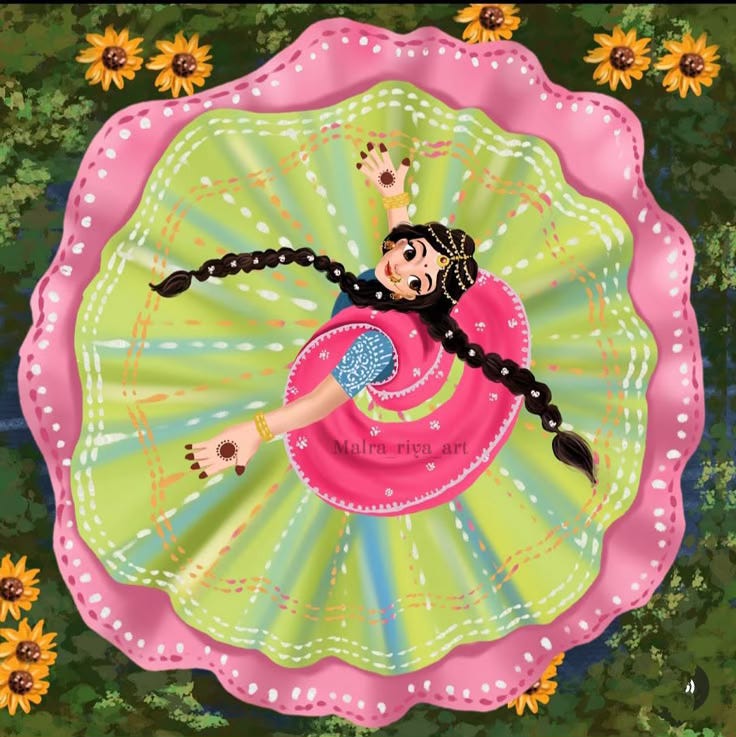
You are not crazy for feeling overwhelmed. You are not selfish for wanting boundaries. You are not ungrateful for wanting a life where your worth is not calculated in degrees, skin tone, marriage status, or how quickly you answer family phone calls.
You have the right to:
Make mistakes without believing you are a mistake.
Rest without earning it through pain.
Say “no” without giving a 10-slide justification.
Be loved for who you are, not just for what you produce.
The world around you may not yet be built to honour that right. But you can still start honoring it within yourself, slowly, quietly, stubbornly.
Naming It Is Not Betrayal; It Is the Beginning of Freedom
Talking about this kind of anxiety often feels like disloyalty—to parents who tried their best with what they knew, to a culture that gave us community and depth, to sacrifices that were real and costly. But silence has not protected us. It has only protected the systems that keep asking Brown women to carry everything but their own peace.
Naming the cost does not erase the love. It simply refuses to hide the bill under the table.
When one Indian woman says, “This is what it felt like to grow up constantly watched, constantly scolded, constantly responsible,” she is not just venting. She is breaking a pattern of secrecy that kept our mothers and grandmothers blaming themselves for wounds they never caused.
If This Is You, You Are Not Alone
Maybe no one has ever told you this in plain words, so let this newsletter be that moment:
There is nothing wrong with you for shaking when someone raises their voice.
There is nothing wrong with you for dreading family functions.
There is nothing wrong with you for needing therapy, medication, rest, or distance.
There is nothing wrong with you for wanting a life where your nervous system gets to relax.
The problem is not that Brown women are anxious. The problem is that Brown women have been asked, generation after generation, to hold the emotional weight of families, workplaces, and societies that rarely hold them back.
Anxiety, in this story, is not weakness. It is evidence. Evidence of everything you survived, everything you carried, everything you swallowed so peace could exist for everyone but you.
And if you feel seen in these words, know this: your story is not a footnote. It is a chapter of our collective truth. Speaking it aloud is not the end of your loyalty to your family or culture. It is the beginning of your loyalty to yourself.
Thank you for sharing. Its just so hard being around people who read into every single facial movement or gesture or tone you make since the know you from birth. It's exhausting. I'm not Indian but my own family reads into every single expression/word I say, it's really hard.
Love ur writing and style.